This report by Matthew Farrell was published in Lizard News on 20 October 2026. Thanks to Matthew for permission to re-publish it here.
A decade of predator control in the Whakamārama bush has removed more than 24,000 pest animals and led to a marked increase in native bird and plant life.
The volunteers behind Friends of the Blade celebrated the milestone on Saturday 17th October by officially becoming the Whakamārama Forest Project | Ngā Hoa o Pā Kererū.
The group works across about 300 hectares of the Kaimai Mamaku Conservation Park in the rohe of Pirirākau hapū, centred on the Pā Kererū Loop Track and Ngāmārama and Leyland O’Brien tracks. Since 2015, volunteers have removed about 18,900 rats, 4,000 possums, 180 stoats and 1,200 mice.
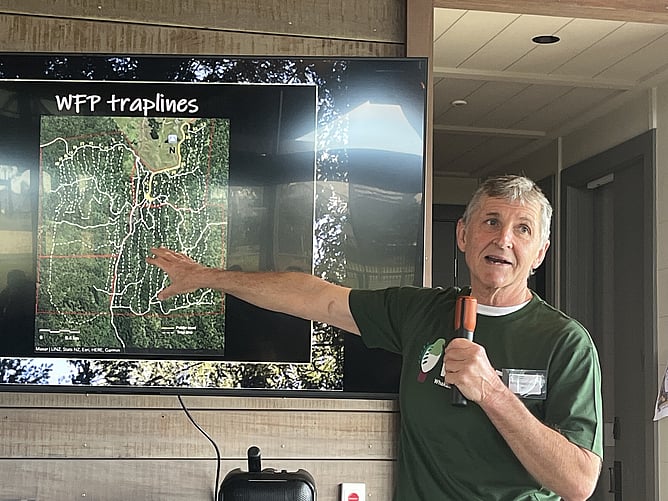
John ‘Rolly’ Rowlandson tells the story behind the stats. PHOTO: Matthew Farrell, Lizard News
The results are increasingly visible and audible, with toutouwai | North Island robin, tūī, korimako | bellbird, and kererū becoming more common.
Robin and hōmiromiro | tomtit populations have bounced back, while pekapeka | native bat and tītitipounamu | rifleman have also been detected.
The project now has about 40 volunteers, who contributed an estimated 3,253 hours during the past year.
Volunteer John ‘Rolly’ Rowlandson says nearly 6,000 pests were removed in the past year alone, averaging about 110 to 120 a week.
The trapping network includes 23 rat and possum lines, three stoat lines and several automated lines, with 1,000 to 1,500 bait stations across the area. New tracking tunnels are also being installed to improve monitoring and provide better data for funders and supporters.
Rolly says the name change was an obvious step because many people didn't understand what Friends of the Blade meant, and some in Whakamārama didn't even know where “The Blade” was. The new name better reflects the project's location and purpose.
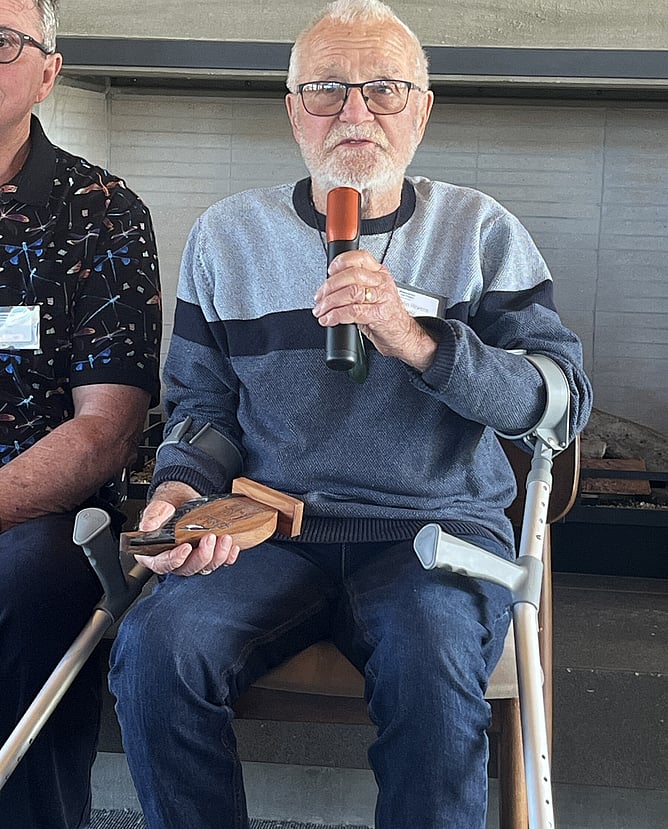
Founder Colin Hewens was praised for his leadership. PHOTO: Matthew Farrell, Lizard News
Founder Colin Hewens was celebrated at Saturday’s event for starting the project after 10 years of predator-control experience at Puketoki. He proposed a pest-free area around the Pā Kererū Track in 2015 and, with the help of other volunteers, established the first trapping lines.
Colin says he learned predator-control techniques under Terry Edwards at Puketoki, where pest numbers fell dramatically over several years.
The project now works with the Department of Conservation, Bay of Plenty Regional Council, Whakamārama Community Incorporated and other conservation organisations and supporters.
Guest speaker Andrew Poad, from the Ōtanewainuku Kiwi Trust, told the gathering the results are evident in the forest, with abundant insect species photographed.
He says he’s spent several nights in the area and was struck by the lack of signs of predators and the wide variety of native life.
The project has also begun working with the wider community through a trap library, allowing residents to borrow traps and help create a biological corridor between the Whakamārama bush and conservation work towards Aongatete.
The new name and identity were launched at a 10th anniversary celebration at The Lake House of Pacific Lakes Village in Arataki. The event included guest speakers, food, drinks and a presentation to Colin, followed by a commemorative photograph of volunteers and supporters.
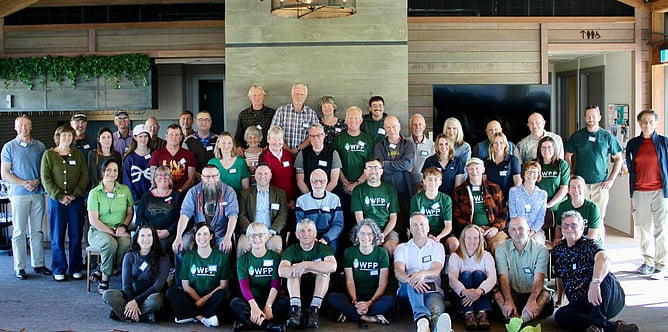
Above: Supporters and volunteers at the 10th Anniversary and Rebranding event. Below: Watch our "10 Years Protecting the Kaimai Mamaku" story on YouTube.
The group is keen to hear from people interested in volunteering. Visit whakamaramaforest.nz or email contact@whakamaramaforest.nz
Thanks to our supporters, volunteers and sponsors, including Manawa Trust, Kaimai Law Bethlehem & Omokoroa, BOP Regional Council, Western BOP District Council, FreshChoice Ōmokoroa, Bay Trust, DOC, Manaaki Kaimai Mamaku Trust.