VOLUNTEER RESOURCES
Trapping Tips
Practical advice to help you get the best results from your traps.
Jump to:
General Trapping Tips
Helpful tips and advice shared by our experienced volunteers.
Using Meat Trimmings as an Alternative Lure
A Tip from Col
Bits of cut off trimmings from humans' meats popped into the freezer, over the fortnight of non-trapping can be used as alternative lures to give our clients a change if taken out and put in a container the night before.
How to Make Your Traps More Effective
Trapping Tips from John Bissell
We encourage you to read a detailed write-up of John Bissell's October 2024 talk, attended by a dozen Friends of the Blade members: An Evening With a Trapping Guru.
A few key points:
'Bad trapping is worse than no trapping.' Make sure your trap has no snags, is clean etc. Bad trapping teaches predators to avoid traps. And they teach their young.
Change things up, especially lures.
Recreate what is natural, avoid anything synthetic; use scent trails, wipe scent around trap entrances.
Use a species' behaviour against it.
Simple Ways to Improve Your Catch Rate
Trapping Tips from Cam Speedy
Several of our volunteers attended a talk in October 2021 by wildlife biologist Cam Speedy. (You can watch a webinar from Cam with lots of his tips by following this link.) We asked those who were there for some of the main takeaways, so huge thanks to Bill, Rolly and Jen for the following:
20% of traps do 80% of the catching.
If a trap has not caught anything for months, then move it (even if it's just a few metres).
Constantly change the type of lure you use, e.g. treacle gold, chocolate paste, peanut butter.
Really scuff up the ground around your traps, pests find this really interesting.
Use lots of ground-baiting/pre-baiting (for cats and stoats especially).
Put lots of flour/sugar around traps.
Drag an onion bag full of offal along your trapping lines.
Make use of cameras to know what's actually happening.
The benefits of Mutton fat: Rubbed over the grills on all traps and sprinkled around as a lead in to traps. Kidney fat is especially good as it crumbles after being frozen.
Dec/Jan/Feb are prime times for catching stoats as this is when the 'gullible' juveniles disperse from their mothers. The females are already impregnated at this stage.
Attention to detail at each bait station is so important. It's not just about re-baiting and moving on. Look at the area around the bait station: Will it create interest for the predator to investigate?
Is the efficiency of the traps checked? (e.g. the tension in the Warrior traps, the stability of the traps, dirt/lure under yellow plate, etc.)
Using Canola Oil to Protect Your Traps
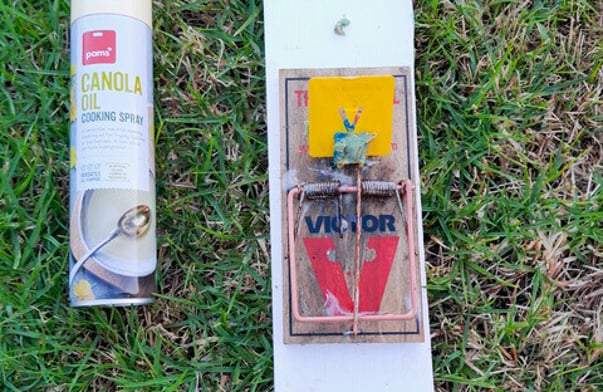
One of our volunteers, Stu M, trialed the use of canola oil cooking spray to keep his rat and possum traps free of rust and working smoothly, and found it worked great.
As a result he sprays the steel mechanism of Victors with a burst of canola oil each time they are set, as well as the hinges on the Warrior traps, and the metal parts of DOC 200s and 250s, as well as a dash of oil elsewhere as an attractant. For more details about Stu's trial, click through to our blog post titled Innovations at the Blade.
Rat & Mouse Trapping Tips
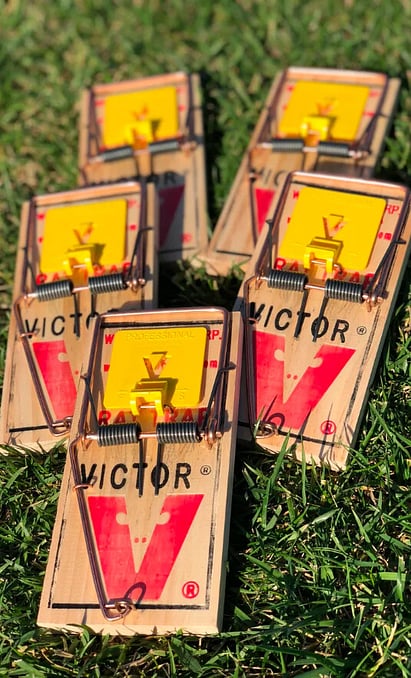
Always wear gloves.
Make sure the yellow bait plate is as flat as possible, i.e. not at a steep angle from the wooden base.
Sight through the trap to make sure it's free of cobwebs, leaves or other debris, especially trap boxes with robin/toutoutwai extensions attached.
Place the trap in different locations, particularly along natural 'runways', for example, fallen logs.
Set the trap to 'sensitive'.
Clean underneath the yellow plates and surrounding area to remove anything stopping the plates shutting flat against the wooden base of the trap.
Try different baits and bait mixes.
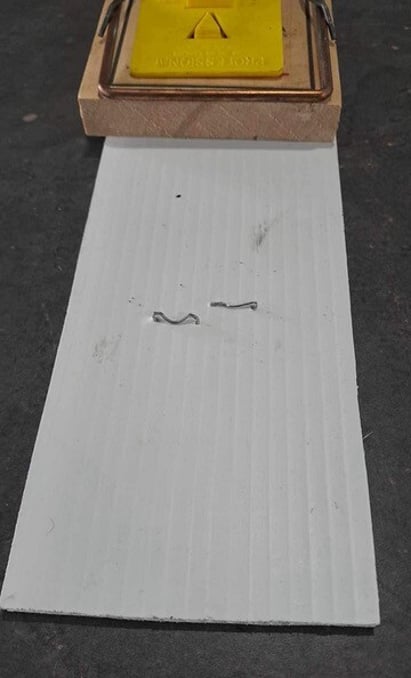
Some of the newer lures, like Ferafeed 213, are hard to spread. Trapper Brett T added a couple of simple staples, flattened, to the corflute to make it easier to smear on the lure.
Possum Trapping Tips
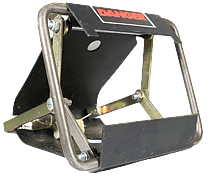
How to Calibrate Your Warrior Trap
A reminder to all volunteers to calibrate your possum Warrior traps. A tent peg is a good item to use to test your trap safely (with safety bar in place!) by hooking the hooked part of the peg over the trigger and pulling gently downward. (If you have one at home, please add it to your kit. Otherwise, tent pegs will be available at the trailer.)
Remember, to make the trigger more sensitive you need to open out/widen the curved ends of the trigger; to make it less sensitive, close them. There is a YouTube video that explains calibration but don't ever put your hand in the trap like the DOC guy does, use a tent peg! The calibration instructions start at 4'30" in this video. A few things, like the trigger, look a bit different, but the instructions still apply.
When to Replace Warrior Safety Bars & Frames
Over time, the safety frames used in Warrior possum traps get too weak, and that's dangerous. Don't hesitate to get a new safety bar out of the trailer if yours is looking dodgy.
Add a Possum Ramp
A Tip from Craig W:
A possum ramp is basically a 1.8m fence paling attached to the tree 30cm below your Warrior trap at an angle of about 45° (to prevent ground birds getting up them). These are widely used by professional trappers, and our friends at Otanewainuku have them on nearly all of their tree mounted traps. Our very own super trapper Bill R has them on all his traps in the SE corner of the Blade and is adamant they were a big contributor to recent unprecedented huge kill numbers out there (52 possums in 20 days!).
By adding a ramp, you are making it easy for the predator to kill itself, and by drizzling the top of the ramp with flour lure or even better Rolly's lure* you're giving it a simple pre-feed and encouraging a reluctant pest to return.
If any of our volunteers would like to try them, email us at contact@friendsoftheblade.org.nz and we'll pass your message on to Craig, who will happily knock a few of them up for you. All you have to do is carry them in and secure them below your favourite tree mounted traps. If the video below doesn't convince you...
Possum Lure Recipes
Rolly's Lure
Here's a possum lure recipe from our very own Rolly:
1 cup cheap peanut butter
1/2 cup cheap vegetable oil
1/2 cup plain flour
1/2 cup icing sugar
Mix it up. "Possums love it."
Cam Speedy Lure
The following recipe has been shared by Cam Speedy from Wildlife Management Associates Ltd. His advice is to mix up the following ingredients in a large tub/bucket and for a larger batch, multiply the recipe by 10:
1 kg flour
100 g icing sugar
100 g milk powder
15 ml peach essence (Cam says you can buy peach essence online, but vanilla or cinnamon are just as good and easy to get.)
Just Plain Old Mayo
Good old mayo can be used as a possum and rat lure. Rolly advises that it be used just like the green lure (put it on the board and tree leading up to the warrior trap), adding "you could even rub a little onto the cork". He also suggests trying it out in rat traps. Plastic sauce, mustard, mayo squeezy type bottles are good for dispensing. (If you have spares of these, please donate them to the trailer.)
Stoat, Weasel & Ferret Trapping Tips
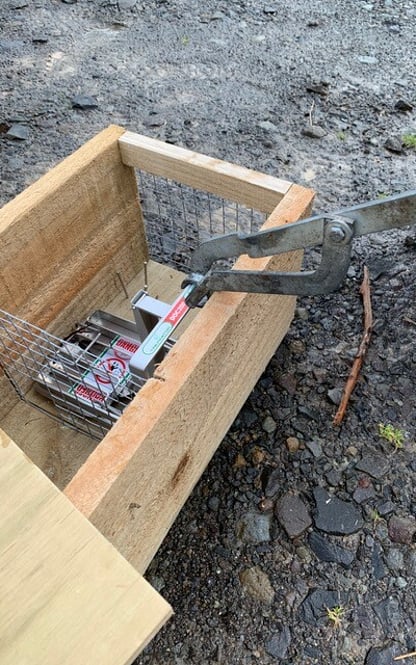
Using DOC 200s & 250s
Here’s a video from Predator Free NZ on setting a DOC 250. Unlike the video, we recommend using a setting tool for the 250, though you may be able to use your hands for a 200.
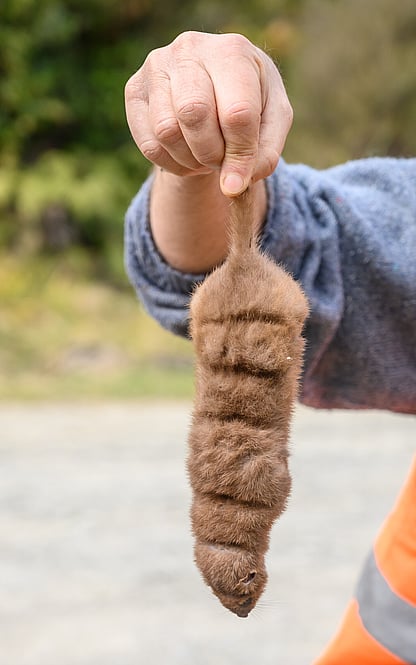
How to Catch a Ferret
A Tip From Bill R
Bill caught a very pregnant ferret in the south east corner of the Blade late last year. He explained: "I had hung a rat above the trap (cone of scent) which was gone, and put a rat in the trap. She was so long and fat it was hard to see how she had contorted herself so many ways to get her head onto the plate, but she did!"
Alternative Stoat Bait Idea
This one came out at our Refresher/Training day in May 2022, courtesy of Anna.
"A method of baiting that I have seen that is very effective is using a dishwash sponge soaked in different attractants, like mutton fat, smokey bacon or bacon fat, fish berley... and paté (for the more discerning and upmarket rat or stoat). The sponge can be cut so it wedges in the cup on the trap and can be kept in a Ziplock bag of potion – But since it is the decomposition of fresh baits that is concerning your group you could soak in a meat or salmon version of this: Lure-It Bottled Lure | Connovation."
AT220 Trapping Tips
Cleaning AT220 Lure Blockages
A video from volunteer Craig W covering the most common causes of lure blockages in pouch model AT220s and how to fix them.
AT220 Eye Cleaning Guide
A useful video from NZ Autotraps showing how to clean the eyes on an AT220 trap.
AT220 Quick Service Guide
A quick service guide from NZ Autotraps. Please note, we check our AT220s every 2–3 weeks, rather than the 4–6 months suggested in this video.
Setting Live Capture Cages
A video from volunteer Craig W about how to set one of our live capture cages.
Mink Police Units for Live Capture Cages
A short video showing how to reset a Mink Police Unit.
Finished your trapline?
Record your latest trapping results or check upcoming volunteer dates.

Whakamārama Forest Project is an all-volunteer predator control group helping protect native bush and wildlife in the Kaimai Mamaku.

